
By: Isabella Bercan
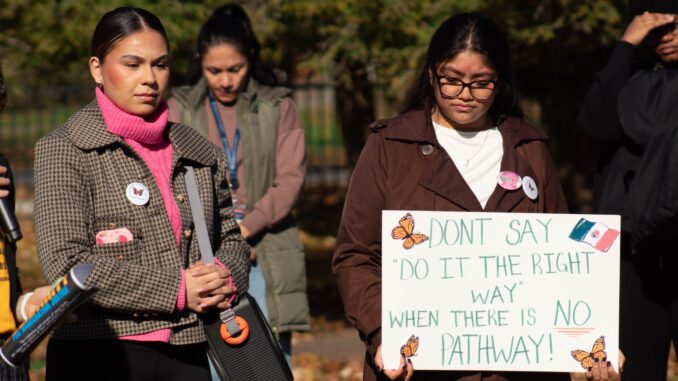
A year after 2025’s Midway Blitz, students and staff at Dominican reflect on how the immigration enforcement operation impacted our students and their communities. For Maria Sarango, former president of the Undocumented Immigrant Alliance (UIA), Midway Blitz had brought back those feelings of isolation, fear, and uncertainty for many.
“It felt like COVID-19 for us…it felt like we were locked again.”
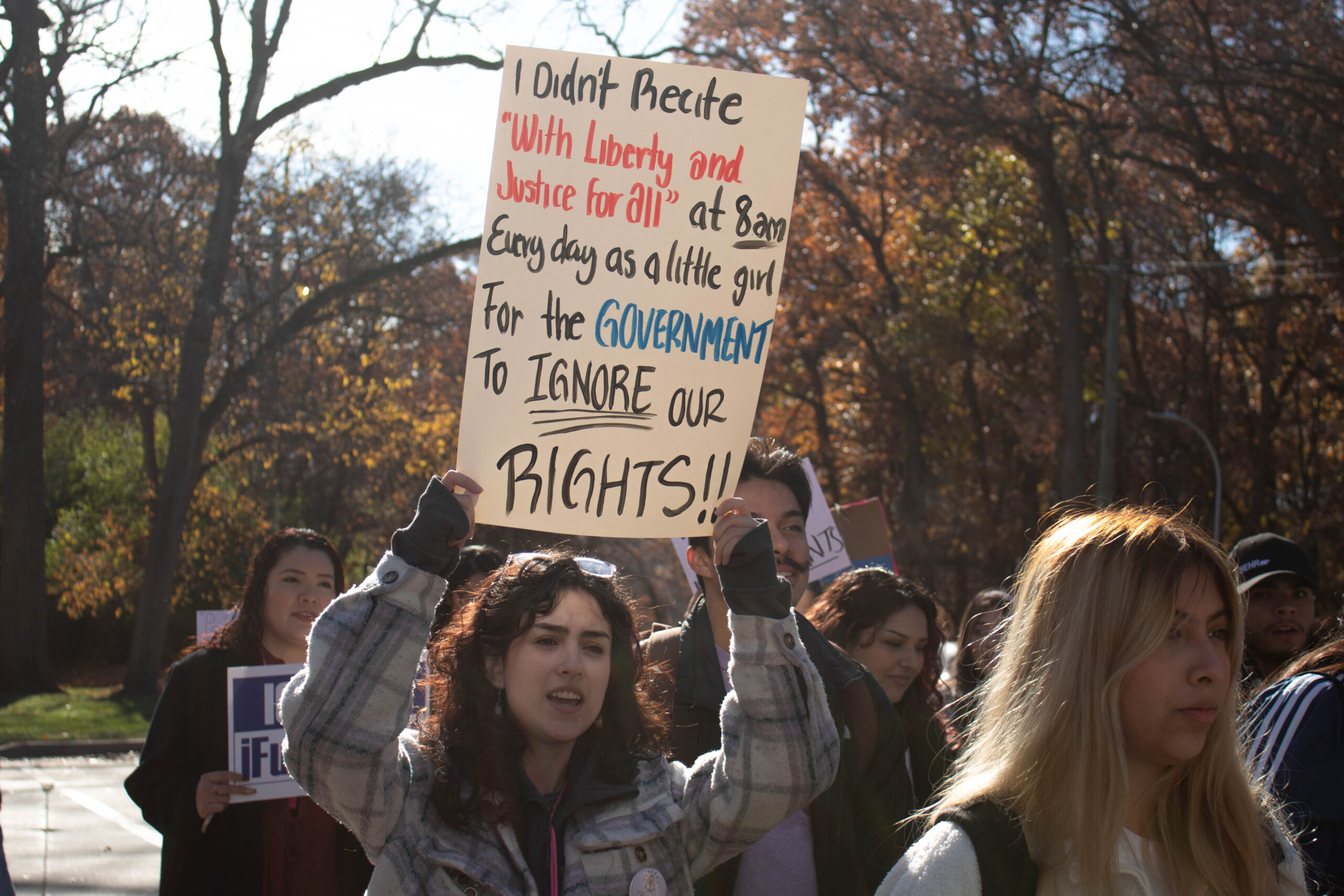
Last September, the Trump administration began Operation Midway Blitz in the Chicago area. This large-scale immigration enforcement operation led to hundreds of arrests and the killing of Silverio Villegas Gonzalez, a father of two in Franklin Park. Protests and demonstrations that were demanding justice for Gonzalez and those being held at the ICE facility in Broadview, which lasted hours, were met with tear gas and pepper balls. The operation created mass fear and uncertainty for immigrant communities in Chicago, including our own Dominican community.
“There’s still fear; we have a big cohort of Dream US scholars who are from out of state. They come here, and they cannot visit their families,” Sarango explained. “[UIA]has been there…to build community, to build hope, to build empowerment.” This goes back to their three core pillars of community, education, and advocacy. UIA has seen an eagerness from students for advocacy since Midway Blitz, “…students are craving that, ‘Okay, I want to go to a rally, I want to do a walkout.” But so much of the advocacy is also coming from undocumented students themselves.”
When second-year student Karen Lara saw the news on the killing of Silverio Villegas Gonzalez, she thought of her own father,
“I was just in complete shock; that could have been my dad…there were reports of ICE being at Menards. So, I would go to Menards with him…before that I usually never went out with him, but since then I started to go…just in case something happens.” Lara shared, “my family and I are doing okay now…my mom can go out now to go get groceries, beforehand she was afraid…Whenever I go out with my dad, I still go with him.”
Dominican knew fear was looming over its students and their families. Jaqueline Neri Arias, assistant vice president for Hispanic-Serving and Culturally Sustaining Initiatives, said,
“Students went into hiding, their families went into hiding, many families were deported, many families were held in detention centers…for long periods of time, some of them are still there now.”
Neri Arias wants students to know since Midway Blitz; administration has worked to update policies and procedures to keep us all as safe as possible on campus. Dominican has updated the front door policy to ensure individuals cannot just come in, ask for someone, and go looking for students or staff.
“There’s a protocol for calling campus safety, getting them involved, not just letting people through campus…roaming freely…we need to keep the safety of our students physical, but also mental. We don’t want just random ICE agents roaming through campus in a way that will freak students out and well, you can’t learn if you are that fearful, right?”
Neri Arias reflected that Dominican is stronger as a community because of Midway Blitz and all that occurred.
“For example, faculty gained a new level of understanding of our students’ lives that maybe they didn’t have before, right? They became more flexible in policies, they became more culturally sustaining, right, and responsive to our students’ needs.”
Students like Lara believe Dominican has done a good job with providing resources and support for its students. Resources such as whistles were available for those interested in protesting; Dr. Neri Arias further explains,
“We trained them on ‘Know Your Rights,’ we gave them cards…we had a lot of legal resources and free legal clinics where students could renew their DACA, or they could ask questions about a pathway to citizenship.”
Midway Blitz imposed that fear, isolation, and uncertainty a year ago and intended to break down our communities; Maria Sarango rejects that now and shares,
“…we all have dreams and hopes…we still want to go to graduate school. We still want to pursue…a job in finance and banking or get an internship somehow. And we figure things out. I think that has been the theme: figure it out all along. And that goes for the first-generation experience; DU is mostly first-generation…we don’t know, we never know, but we figure it out.”

Be the first to comment