
By Bella Bercan
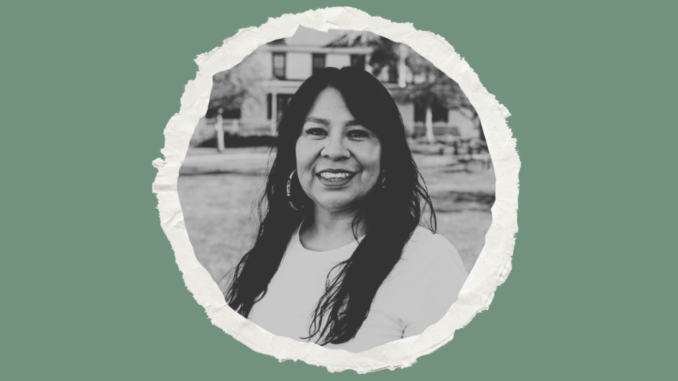
On March 3rd, in recognition for Women’s History Month, a lecture was given by Krystal Two Bulls hosted by The Indigenous Club.
Oglala Lakota and Northern Cheyenne grassroots activist Krystal Two Bulls came to speak on campus. Her speech explored the complexities of living as an Indigenous person in our country and the pain and strife that has come with the fights she has fought for her people and communities, especially as a woman in these spaces.
She took the time to share what brought her to grassroots activism, explaining that she wasn’t trained to take on roles such as the executive director of the organization Honor theEarth, which she inherited, but instead she was raised by parents who “…[saw] the need to protect our land, our air, and our water.”
Her father was a Chief who always spoke up and fought for the protection of their land, and on her mother’s side she is related to two different Chiefs.
Chief Gall, known as a master strategist at the Battle of Little Bighorn, which as Krystal put it, “…that was the only time that the U.S. military was defeated on their own territory, in their own lands…I come from strategists that fought on those battlefields that day and knew how to strategize, knew how to come out on the other side with a victory to protect our homelands”
Her family tree continues to Chief Man Afraid of His Horses who was so feared that people were even afraid of his horse. She explained this stays in your bloodline; it’s not something that just goes away. She wasn’t trained to be a fighter, an executive director, or an activist, but she knew people who weren’t from her community were trying to “rape our mother earth.” These people, as she put it, want to “dig mother earth up” and one of the many things they want to do is extract coal.
When Krystal was 18 years old, she was searching for stability, leading her to enlist in the military for eight years because that’s how she believed she could serve her people.
In 2009 and 2010 she was deployed which connected her with the Third Country Nationals (TCN) which are neither the occupying country or the occupied country.
Krystal describes it as a “third country that are coming in and hold down jobs, like house cleaning, they run the subway, and the different stores that exist on the post exchange, and that’s what they do, they get money, very small amounts of money to send home to their families in their countries.”
These people opened her eyes to the realization this was not how she should be serving her people.
As she found herself through activism, Standing Rock came about. This refers to the Dakota access pipeline that was planned to be built through Native land. Krystal knew she had to fight this, and she was there for 3 months straight where she helped handle the logistics of setting up a camp and protesting the pipeline properly. From this experience Krystal and her team built out the campaign many may know as the “Land Back” campaign. She spoke on the Black Hills, which is famously known as “Mount Rushmore” but for the Lakota people and Northern Cheyenne, is known as the “He Sapa” which represents their origin as people and where they originate from. Mount Rushmore was carved into their sacred mountains which she stated, “was a slap in the face.”
Donald Trump visited Mount Rushmore in 2020 for Fourth of July and his campaign. Krystal and other indigenous activists believe that this visit took away from the sacredness of the land for the Northern Cheyenne and Oglala Lakota.
“It was actually really important that we push back on that, it was important that the world see that Native people actually exist.”
As she reflected on being an activist, she pulled it all back to women. Over her lifetime of experience, she stated, “It has always been the women who are the first ones to step forward in our communities. There have been men who have tried to take credit for the work that I have put out there.”
When speaking about violence towards women in these fights for justice, she shared, “Why do women have to hold that kind of sacrifice, why do we have to carry the brunt of that, why do we have to pay the price for those things?”
Krystal stated she would not stop speaking her truth and fighting for her land, community, and women in these spaces.
“We exist, we are still here, and despite their best efforts to eradicate us we didn’t go nowhere.”

Be the first to comment